
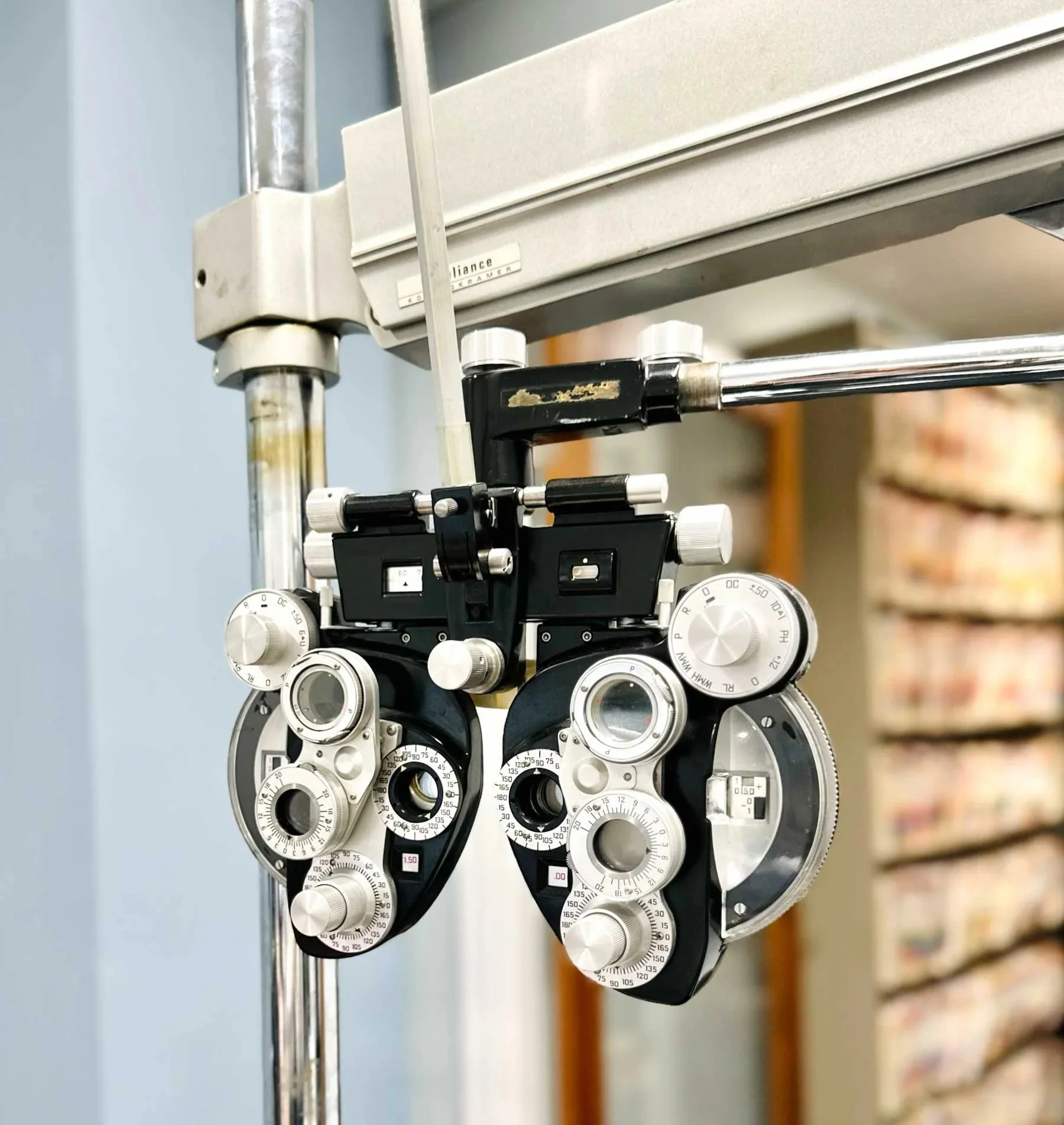
You can see clearly; your glasses seem to work, and your eyes don’t hurt. Do you really need an eye exam? For many people, the answer may still be yes. A comprehensive eye exam isn’t only about determining whether you need glasses. It also gives your eye care provider a chance to evaluate your vision and check your eyes for signs of conditions that may not cause obvious symptoms at first.
At Specialty Eye Consultants, our ophthalmologists and optometrists provide comprehensive eye care for patients in Reading, Wakefield, and communities throughout Greater Boston.
Is a Comprehensive Eye Exam Different From a Vision Screening?
Yes. A basic vision screening generally checks how clearly you can see at a particular distance. These screenings can be useful, but they provide limited information about comprehensive eye health. A comprehensive eye examination is much more thorough.
Depending on your age, symptoms, medical history, and individual risk factors, your examination may assess your vision, prescription needs, eye pressure, eye movement and alignment, and the internal and external structures of your eyes. Your eye doctor can then determine whether additional testing is appropriate.
What Happens at an Eye Exam?
Although every examination is individualized, your appointment will typically begin with a discussion about your vision and health history.
Your eye care provider may ask about:
Current vision concerns
Eyeglasses or contact lenses
Previous eye conditions or surgery
Medications
Medical conditions
Family history of eye disease
Changes in your vision
Don’t hesitate to mention even minor symptoms. Changes in night vision, glare, floaters, headaches, dryness, or difficulty reading can all provide useful information.
Checking Your Vision
One familiar part of an eye examination is the visual acuity test—the eye chart. Your provider may also perform a refraction to determine whether you need corrective lenses or whether to update your current prescription. But this is only one component of a comprehensive examination.
Checking Eye Pressure
Eye pressure, or intraocular pressure, may be measured as part of your examination. Elevated pressure can be associated with glaucoma, although eye pressure alone cannot determine whether someone has the disease. Your ophthalmologist considers pressure measurements together with other findings to assess your glaucoma risk.
Examining the Health of Your Eyes
Your provider will examine structures at the front and back of your eyes.
Depending on your needs, your provider may use dilating drops to widen your pupils and provide a better view of internal structures, including the retina and optic nerve.
This can help observe signs of conditions such as:
Cataracts
Glaucoma
Macular degeneration
Retinal disease
Diabetic eye disease
Other ocular conditions
Why Would I Need Additional Eye Testing?
If your examination shows something that requires a closer look—or if you’re already being monitored for an eye condition—your doctor may recommend additional diagnostic testing. Modern ophthalmology provides sophisticated ways to evaluate the optic nerve, retina, visual field, and other aspects of visual function.
Specialty Eye Consultants uses advanced diagnostic technology as part of its complete and specialty ophthalmology care. Not every patient needs every test. Your doctor will determine which evaluations are appropriate based on your individual findings.
Do I Need an Eye Exam If My Vision Is Fine?
Clear vision is only one aspect of eye health. Some eye diseases can develop before you notice significant changes in everyday vision. That’s why preventive examinations become increasingly important for people with certain risk factors.
You may require closer monitoring if you have:
A family history of eye disease
Diabetes or certain other medical conditions
A previous eye condition or injury
Elevated eye pressure
A history of eye surgery
New or changing visual symptoms
Your eye care provider can recommend an examination schedule appropriate for you.
Ophthalmologist or Optometrist: Who Should Perform My Eye Exam?
Both ophthalmologists and optometrists play important roles in eye care.
Optometrists provide primary vision care, including comprehensive examinations and vision correction. Ophthalmologists are medical doctors who can diagnose and treat eye disease and perform eye surgery. One advantage of choosing a multi-specialty practice is access to both routine vision care and specialized medical or surgical ophthalmology when needed. At Specialty Eye Consultants, the physician team includes specialists in glaucoma, cataracts, pediatric ophthalmology, oculoplastics, and comprehensive ophthalmology, along with optometric care.
Comprehensive Eye Exams in Reading and Wakefield, Massachusetts
Specialty Eye Consultants provides comprehensive, specialized eye care from its offices in Reading and Wakefield, MA, serving patients in surrounding communities throughout Middlesex County and Greater Boston.
If you have noticed a change in your vision, need an updated prescription, have a family history of eye disease, or haven’t had your eyes examined recently, a comprehensive eye exam can deliver valuable information about both your vision and eye health.
Schedule Your Comprehensive Eye Exam
Your eyes can change over time—even when those changes aren’t immediately noticeable. A comprehensive examination gives you and your eye care provider a chance to identify concerns, monitor existing conditions, and create a plan to maintain healthy vision.
Contact Specialty Eye Consultants to schedule a comprehensive eye examination at our Reading or Wakefield office.
Dry Eye Care in Reading and Wakefield, MA
Specialty Eye Consultants provides comprehensive eye care for patients throughout Reading, Wakefield, North Reading, Stoneham, Melrose, Winchester, Burlington, Middlesex County, and surrounding Greater Boston communities.
Our goal is not simply to briefly mask uncomfortable symptoms. An extensive analysis can help identify factors leading to dry eye and guide a treatment plan based on your individual needs.
If dry, burning, watery, or irritated eyes have become part of your daily routine, they don’t have to be.
Contact Specialty Eye Consultants to schedule an eye evaluation and learn more about your dry eye treatment options.